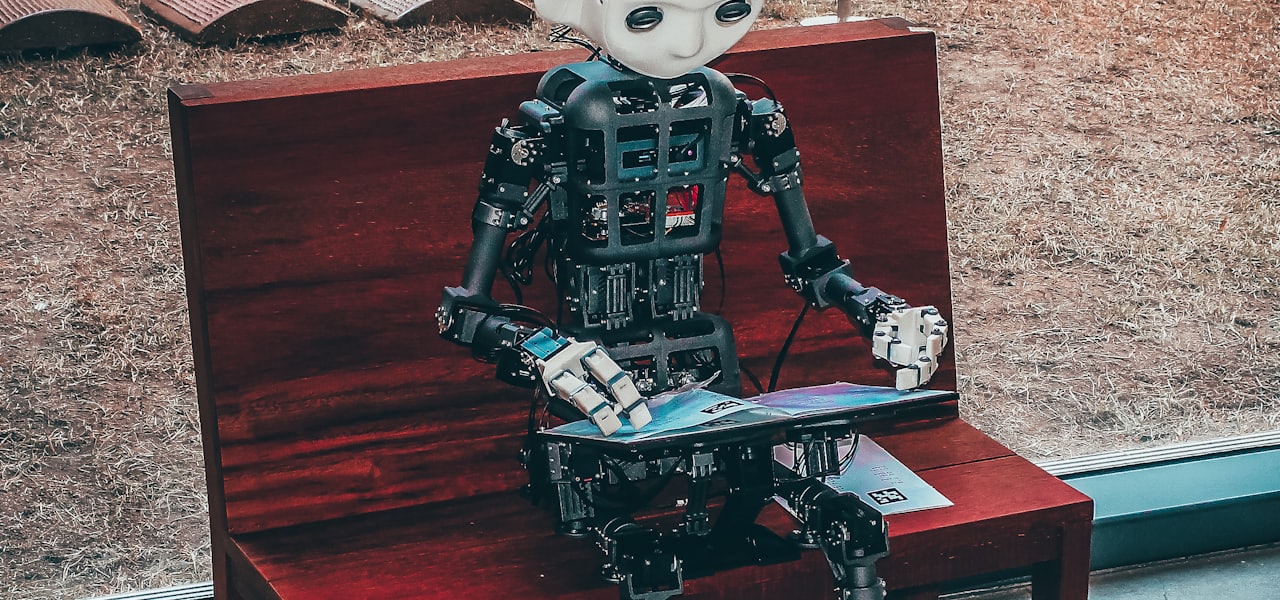
Biohybrid systems refer to the integration of biological materials, such as cells or tissues, with artificial components, including electronics or mechanical structure. This combination incorporates the capabilities of living organisms with the precision of man-made technology. As a result, these systems perform tasks that neither biology nor machines could achieve independently. Biohybrid systems might use lab-cultured muscle cells to power small robots or combine sensors with living tissue for better health sensing. The intent behind these systems is to combine the benefits of biological and technological components to introduce new solutions for complex medical challenges. Biohybrid systems may have transformative potential across sectors, such as robotics to create actuators and sensors that mimic natural muscle and nerve function, medicine in developing smart implants and drug delivery systems, in prosthetics for enhancing user control through neural or muscular interfaces and environmental sustainability for deploying biohybrid solutions for pollution sensing or remediation. == Origin == The term "biohybrid" is a compound of "bio" from biology (meaning life) and "hybrid" (referring to a combination of distinct elements), denoting a field of study. Its use helps distinguish such systems from purely biological constructs or entirely synthetic machines. Early academic mentions may include bio actuated robotics papers and foundational tissue-robot integration studies published in journals like Nature Biotechnology or Science Robotics. The emergence of the term reflects a growing recognition of the need to describe systems that do not fit cleanly into traditional categories. == Design principles == One of the most significant biohybrid challenges is to engineer interfaces between living tissue and artificial materials that are efficient. This means having precise control over adhesion at the surface, diffusion of nutrients, and signal conduction. Actuation mechanisms within the heart of these systems generate movement or mechanical response. These may be in the form of living muscle cells such as skeletal myocytes or cardiomyocytes, soft pneumatic actuators, or electrical stimulation-responsive tissues. Materials selection is equally critical. Hydrogels, elastomers like PDMS (polydimethylsiloxane), and biopolymers are commonly used due to their softness and biocompatibility. These materials must support cell viability, resist immune attack, and allow the integration of mechanical or electrical components. == Key components == At their core, biohybrid systems work by bridging living biological parts with technology. Through this integration, functionality that neither system could accomplish singularly is possible. Biological parts may be cells, tissues, or even organs—occasionally cultured in a laboratory setting. These biological parts carry out biologically inspired behaviors, such as muscle contraction or chemical sensing in the body. Technological components may constitute devices like sensors, electronic components, and mechanical structure. These manipulate the system, supply power, or transfer data. An example is a sensor that is implantable within a body and detects glucose levels as it sends information to a smart phone. By integrating these artificial and biological parts, biohybrid systems can perform advanced functions, such as tissue regeneration, real-time health monitoring, or the recovery of motor function in paralysis patients. Biohybrid systems generally consist of two major components: the biological and the mechanical. Biological components may include muscle cells for contraction, endothelial cells for vascularization, and stem cells for regenerative capabilities. Mechanical components comprise soft actuators that mimic organic motion, synthetic scaffolds that provide support and structure, and microfluidic systems that facilitate the delivery of nutrients and removal of waste. These components are combined in a manner that allows for dynamic, lifelike behavior—such as the contraction of tissue or the propagation of mechanical waves—while maintaining biocompatibility and durability. == Applications == The range of applications for biohybrid systems is broad and continuously expanding. In robotics, biohybrid structures have been used to engineer microscopic, muscle-driven machines, such as Harvard University's biohybrid stingray robot. In medical applications, they offer new alternatives for organ repair and augmentation, including biohybrid heart valves and esophageal scaffolds. Biohybrids are also promising in neural interfaces, where the goal is to create long-lasting, stable interaction between mechanical devices and brain tissue. Muscle-actuated drug response platforms are under exploration in pharmacology for modelling and real-time screening. == Examples == Several high-profile research projects have demonstrated the potential of biohybrid systems: Harvard researchers developed a biohybrid swimming ray powered by rat cardiac cells layered onto a gold skeleton, mimicking the motion of a real stingray. At the Massachusetts Institute of Technology, a cardiac pump actuated entirely by living heart muscle cells was engineered to simulate the behavior of a beating heart. Bio actuated soft robots have been built to simulate gut peristalsis, using muscle contractions to replicate natural wave-like movement in the digestive tract. == Challenges and limitations == As with many technologies that involve living systems, biohybrid systems raise important ethical and biomedical questions. Cell sourcing remains a key issue, particularly when embryonic or animal-derived cells are used. Long-term viability is another concern—living tissues must be kept alive with nutrients and oxygen, and they often degrade or elicit immune responses when implanted. Powering these biological parts presents logistical and ethical hurdles as well. Systems must either include internal mechanisms for nutrient delivery or be supported externally, which can limit portability and independence. == Future directions == Researchers are exploring self-directed, self-regulated organ substitutes and regenerative implants that can respond to their surroundings in real-time. These systems may be integrated with artificial intelligence to make them adjust to stimuli and coordinate complex behaviors. Future potential applications are wearable biohybrid systems for rehabilitation, space medicine devices for long-duration missions, and implantable devices that integrate into human physiology.
CrewAI
CrewAI is an open-source software framework and platform for building AI agents and multi-agent systems. Written primarily in Python, it is used to define artificial-intelligence agents, assign tasks to them, and coordinate their work through agent teams and workflows. The framework is associated with CrewAI Inc., a startup developing enterprise tools for automating business workflows with large language model-based agents. == History == CrewAI was first released on the Python Package Index in December 2023. The project was created by João Moura and later developed by CrewAI Inc. and open-source contributors. In October 2024, TechCrunch reported that CrewAI had raised $18 million across seed and Series A funding rounds from investors including Boldstart Ventures, Craft Ventures, Earl Grey Capital, and Insight Partners. The report also stated that Andrew Ng and HubSpot co-founder Dharmesh Shah had invested in the company. SiliconANGLE described the company as the developer of an open-source framework for building artificial-intelligence agents and reported that the funding consisted of a seed round led by Boldstart Ventures and a Series A led by Insight Partners. By late 2024, CrewAI had introduced commercial enterprise products built on top of its open-source components. TechCrunch reported that the company's enterprise offering added access controls, analytics, support, and templates for workflow automation. == Features == CrewAI is designed around groups of agents, sometimes called "crews", that can be assigned roles, goals, and tasks. The framework supports agent collaboration, task delegation, tool use, memory, and knowledge sources for retrieval-augmented generation workflows. The project describes two main building blocks: "Crews", which are used for autonomous agent collaboration, and "Flows", which are used for more controlled event-driven workflows. The framework is independent of LangChain and is released under the MIT License. It can be installed as a Python package and is commonly used with external large language model APIs or local models, depending on the developer's configuration. == Business model == CrewAI combines an open-source framework with commercial enterprise products. Its enterprise products are intended for organizations that need to build, monitor, and manage agent-based automations with additional security, observability, and administrative controls.
Stevens Award
The Stevens Award is a software engineering lecture award given by the Reengineering Forum, an industry association. The international Stevens Award was created to recognize outstanding contributions to the literature or practice of methods for software and systems development. The first award was given in 1995. The presentations focus on the current state of software methods and their direction for the future. This award lecture is named in memory of Wayne Stevens (1944-1993), a consultant, author, pioneer, and advocate of the practical application of software methods and tools. The Stevens Award and lecture is managed by the Reengineering Forum. The award was founded by International Workshop on Computer Aided Software Engineering (IWCASE), an international workshop association of users and developers of computer-aided software engineering (CASE) technology, which merged into The Reengineering Forum. Wayne Stevens was a charter member of the IWCASE executive board. == Recipients == 1995: Tony Wasserman 1996: David Harel 1997: Michael Jackson 1998: Thomas McCabe 1999: Tom DeMarco 2000: Gerald Weinberg 2001: Peter Chen 2002: Cordell Green 2003: Manny Lehman 2004: François Bodart 2005: Mary Shaw, Jim Highsmith 2006: Grady Booch 2007: Nicholas Zvegintzov 2008: Harry Sneed 2009: Larry Constantine 2010: Peter Aiken 2011: Jared Spool, Barry Boehm 2012: Philip Newcomb 2013: Jean-Luc Hainaut 2014: François Coallier 2015: Pierre Bourque
Color moments
Color moments are measures that characterise color distribution in an image in the same way that central moments uniquely describe a probability distribution. Color moments are mainly used for color indexing purposes as features in image retrieval applications in order to compare how similar two images are based on color. Usually one image is compared to a database of digital images with pre-computed features in order to find and retrieve a similar Image. Each comparison between images results in a similarity score, and the lower this score is the more identical the two images are supposed to be. == Overview == Color moments are scaling and rotation invariant. It is usually the case that only the first three color moments are used as features in image retrieval applications as most of the color distribution information is contained in the low-order moments. Since color moments encode both shape and color information they are a good feature to use under changing lighting conditions, but they cannot handle occlusion very successfully. Color moments can be computed for any color model. Three color moments are computed per channel (e.g. 9 moments if the color model is RGB and 12 moments if the color model is CMYK). Computing color moments is done in the same way as computing moments of a probability distribution. === Mean === The first color moment can be interpreted as the average color in the image, and it can be calculated by using the following formula E i = ∑ j = 1 N 1 N p i j {\displaystyle E_{i}=\textstyle \sum _{j=1}^{N}{\frac {1}{N}}p_{ij}} where N is the number of pixels in the image and p i j {\displaystyle p_{ij}} is the value of the j-th pixel of the image at the i-th color channel. === Standard Deviation === The second color moment is the standard deviation, which is obtained by taking the square root of the variance of the color distribution. σ i = ( 1 N ∑ j = 1 N ( p i j − E i ) 2 ) {\displaystyle \sigma _{i}={\sqrt {({\frac {1}{N}}\textstyle \sum _{j=1}^{N}(p_{ij}-E_{i})^{2})}}} where E i {\displaystyle E_{i}} is the mean value, or first color moment, for the i-th color channel of the image. === Skewness === The third color moment is the skewness. It measures how asymmetric the color distribution is, and thus it gives information about the shape of the color distribution. Skewness can be computed with the following formula: s i = ( 1 N ∑ j = 1 N ( p i j − E i ) 3 ) 3 σ i {\displaystyle s_{i}={\frac {\sqrt[{3}]{\left({\frac {1}{N}}\textstyle \sum _{j=1}^{N}(p_{ij}-E_{i})^{3}\right)}}{\sigma _{i}}}} === Kurtosis === Kurtosis is the fourth color moment, and, similarly to skewness, it provides information about the shape of the color distribution. More specifically, kurtosis is a measure of how extreme the tails are in comparison to the normal distribution. === Higher-order color moments === Higher-order color moments are usually not part of the color moments feature set in image retrieval tasks as they require more data in order to obtain a good estimate of their value, and also the lower-order moments generally provide enough information. == Applications == Color moments have significant applications in image retrieval. They can be used in order to compare how similar two images are. This is a relatively new approach to color indexing. The greatest advantage of using color moments comes from the fact that there is no need to store the complete color distribution. This greatly speeds up image retrieval since there are less features to compare. In addition, the first three color moments have the same units, which allows for comparison between them. === Color indexing === Color indexing is the main application of color moments. Images can be indexed, and the index will contain the computed color moments. Then, if someone has a particular image and wants to find similar images in the database, the color moments of the image of interest will also be computed. After that the following function will be used in order to compute a similarity score between the image of interest and all the images in the database: d m o m ( H , I ) = ∑ i = 1 r w i 1 | E i 1 − E i 2 | + w i 2 | σ i 1 − σ i 2 | + w i 3 | s i 1 − s i 2 | {\displaystyle d_{mom}(H,I)=\textstyle \sum _{i=1}^{r}w_{i1}|E_{i}^{1}-E_{i}^{2}|+w_{i2}|\sigma _{i}^{1}-\sigma _{i}^{2}|+w_{i3}|s_{i}^{1}-s_{i}^{2}|} where: H and I are the color distributions of the two images that are being compared i is the channel index and r is the total number of channels E i 1 {\displaystyle E_{i}^{1}} and E i 2 {\displaystyle E_{i}^{2}} are the first order moments computed for the image distributions. σ i 1 {\displaystyle \sigma _{i}^{1}} and σ i 2 {\displaystyle \sigma _{i}^{2}} are the second order moments computed for the image distributions. s_i^1 and s_i^2 are the third order moments computed for the image distributions. w i 1 {\displaystyle w_{i1}} , w i 2 {\displaystyle w_{i2}} , and w i 3 {\displaystyle w_{i3}} are weights, specified by the user, for each of the three color moments used. Finally, the images in the database will be ranked according to the computed similarity score with the image of interest, and the database images with the lowest d m o m ( H , I ) {\displaystyle d_{mom}(H,I)} value should be retrieved. "A retrieval based on d m o m ( H , I ) {\displaystyle d_{mom}(H,I)} may produce false positives because the index contains no information about the correlation between the color channels". == Example == A simple and concise example of the use of color moments for image retrieval tasks is illustrated in. Consider having several test images in a database and a "New Image". The goal is to retrieve images from the database that are similar to the "New Image". The first three color moments are used as features. There are several steps in this computation. Image preprocessing (Optional) - The image preprocessing step of the computation process is optional. For example, in this step all images could be modified to be the same size (in terms of pixels). However, since color moments are invariant to scaling, it is not necessary to make all images the same width and height. Computing the features - Use the color moments formulae in order to compute the first three moments for each of the color channels in the image. For example, if the HSV color space is used, this means that for each of the images, 9 features in total will be computed (the first three order moments for the Hue, Saturation, and Value channels). Calculating the similarity score - After computing the color moments the weights for each of the moments in the d m o m ( H , I ) {\displaystyle d_{mom}(H,I)} function should be determined by the user. The weights have to be adjusted each time in accordance with the application or condition and quality of the images. Following that the d m o m ( H , I ) {\displaystyle d_{mom}(H,I)} function is used to calculate a similarity score for the "New Image" and each of the images in the database. Ranking and image retrieval - From the previous step the d m o m ( H , I ) {\displaystyle d_{mom}(H,I)} values were obtained. Now a comparison of these values can be made in order to decide which of the images in the database are more similar to the "New Image", and thus rank the database images accordingly. The smaller the d m o m ( H , I ) {\displaystyle d_{mom}(H,I)} value is the more similar the two color distributions are supposed to be. Finally, some of the top ranked images (the ones with the smallest d m o m ( H , I ) {\displaystyle d_{mom}(H,I)} value) from the database are retrieved.
Traceability
Traceability is the capability to trace something. In some cases, it is interpreted as the ability to verify the history, location, or application of an item by means of documented recorded identification. Other common definitions include the capability (and implementation) of keeping track of a given set or type of information to a given degree, or the ability to chronologically interrelate uniquely identifiable entities in a way that is verifiable. Traceability is applicable to measurement, supply chain, software development, healthcare and security. == Measurement == The term measurement traceability or metrological traceability is used to refer to an unbroken chain of comparisons relating an instrument's measurements to a known standard. Calibration to a traceable standard can be used to determine an instrument's bias, precision, and accuracy. It may also be used to show a chain of custody—from current interpretation of evidence to the actual evidence in a legal context, or history of handling of any information. In many countries, national standards for weights and measures are maintained by a National Metrological Institute (NMI) which provides the highest level of standards for the calibration / measurement traceability infrastructure in that country. Examples of government agencies include the National Physical Laboratory, UK (NPL) the National Institute of Standards and Technology (NIST) in the USA, the Physikalisch-Technische Bundesanstalt (PTB) in Germany, the Instituto Nazionale di Ricerca Metrologica (INRiM) in Italy, and the National Research Council of Canada (NRC). As defined by NIST, "Traceability of measurement requires the establishment of an unbroken chain of comparisons to stated references each with a stated uncertainty." A clock providing traceable time is traceable to a time standard such as Coordinated Universal Time or International Atomic Time. The Global Positioning System is a source of traceable time. === Food processing === In food processing (meat processing, fresh produce processing), the term traceability refers to the recording through means of barcodes or RFID tags and other tracking media, all movement of product and steps within the production process. One of the key reasons this is such a critical point is in instances where an issue of contamination arises, and a recall is required. Where traceability has been closely adhered to, it is possible to identify, by precise date/time and exact location which goods must be recalled, and which are safe, potentially saving millions of dollars in the recall process. Traceability within the food processing industry is also utilised to identify key high production and quality areas of a business, versus those of low return, and where points in the production process may be improved. In food processing software, traceability systems imply the use of a unique piece of data (e.g., order date/time or a serialized sequence number, generally through the use of a barcode / RFID) which can be traced through the entire production flow, linking all sections of the business, including suppliers and future sales through the supply chain. Messages and files at any point in the system can then be audited for correctness and completeness, using the traceability software to find the particular transaction and/or product within the supply chain. In food systems, ISO 22005, as part of the ISO 22000 family of standards, has been developed to define the principles for food traceability and specifies the basic requirements for the design and implementation of a feed and food traceability system. It can be applied by an organization operating at any step in the feed and food chain. The European Union's General Food Law came into force in 2002, making traceability compulsory for food and feed operators and requiring those businesses to implement traceability systems. The EU introduced its Trade Control and Expert System, or TRACES, in April 2004. The system provides a central database to track movement of animals within the EU and from third countries. Australia has its National Livestock Identification System to keep track of livestock from birth to slaughterhouse. India has started taking initiatives for setting up traceability systems at Government and Corporate levels. Grapenet, an initiative by Agriculture and Processed Food Products Export Development Authority (APEDA), Ministry of Commerce, Government of India is an example in this direction. GrapeNet is an internet based traceability software system for monitoring fresh grapes exported from India to the European Union. GrapeNet is a first of its kind initiative in India that has put in place an end-to-end system for monitoring pesticide residue, achieve product standardization and facilitate tracing back from pallets to the farm of the Indian grower, through the various stages of sampling, testing, certification and packing. Grapenet won the National Award (Gold), in the winners announced for the best e-Governance initiatives undertaken in India in 2007. The Directorate Generate Foreign Trade (DGFT), Government of India, through its notification dated 04.02.2009 relating to Amendment in Foreign Trade Policy (RE2008)has mandated that Export to the European Union is permitted subject to registration with APEDA, thereby making Grapenet mandatory for all exports of fresh grapes from India to Europe. Uruguay has also designed a system called "Traceability & Electronic Information System of the Beef Industry". Traceability in food supply can also refer to practices employed by individual companies, including Ritual and Amway's Nutrilite. In the case of Nutrilite's supplements, ingredients are documented and tested throughout farming, processing, and manufacturing to ensure traceability at each stage of production. == Systems and software development == In systems and software development, the term traceability (or requirements traceability) refers to the ability to link product requirements back to stakeholders' rationales and forward to corresponding design artifacts, code, and test cases. Traceability supports numerous software engineering activities such as change impact analysis, compliance verification or traceback of code, regression test selection, and requirements validation. It is usually accomplished in the form of a matrix created for the verification and validation of the project. Unfortunately, the practice of constructing and maintaining a requirements trace matrix (RTM) can be very arduous and over time the traces tend to erode into an inaccurate state unless date/time stamped. Alternate automated approaches for generating traces using information retrieval methods have been developed. The IEEE defines traceability as "(1)The degree to which a relationship can be established between two or more products of the development process, especially products having a predecessor, successor or master-subordinate relationship to one another. For example, the degree to which the requirements and design of a given software component match. See also: consistency. " and "(2) The degree to which each element in a software development product establishes its reason for existing; for example, the degree to which each element in a bubble chart references the requirement that it satisfies." In transaction processing software, traceability implies use of a unique piece of data (e.g., order date/time or a serialized sequence number) which can be traced through the entire software flow of all relevant application programs. Messages and files at any point in the system can then be audited for correctness and completeness, using the traceability key to find the particular transaction. This is also sometimes referred to as the transaction footprint. == Health care == Patient safety during healthcare service plays an important role in preventing delayed recovery or even mortality, by increasing and improving the quality of life of citizens, and is considered an indicator of the quality status of health services Maintaining patient safety is a complex task and involves factors inherent to the environment and human actions. New technologies facilitate the traceability tools of patients and medications. This is particularly relevant for drugs that are considered high risk and cost. Recent research in the healthcare industry emphasizes the significant impact of Blockchain Technology (BCT) on improving the performance of healthcare supply chain management. It highlights BCT's role in enhancing transparency, data immutability, and efficient management, leading to better cooperation among stakeholders and effective risk mitigation in healthcare services. The World Health Organization has recognized the importance of traceability for medical products of human origin (MPHO) and urged member states "to encourage the implementation of globally consistent coding systems to facilitate national and international traceability". == Security and cri
Gerrit (software)
Gerrit ( GERR-it) is a free, web-based team code collaboration tool. Software developers in a team can review each other's modifications on their source code using a Web browser and approve or reject those changes. It integrates closely with Git, a distributed version control system. Gerrit is a fork of Rietveld, a code review tool for Subversion. Both are named after Dutch designer Gerrit Rietveld. == History == Originally written in Python like Rietveld, it is now written in Java (Java EE Servlet) with SQL since version 2 and a custom-made Git-based database (NoteDb) since version 3. In versions 2.0–2.16 Gerrit used Google Web Toolkit for its browser-based front-end. After being developed and used in parallel with GWT for versions 2.14–2.16, a new Polymer web UI replaced the GWT UI in version 3.0.
Dave's Redistricting
Dave's Redistricting App (DRA) is an online web app originally created by Dave Bradlee that allows anyone to simulate redistricting a U.S. state's congressional and legislative districts. == Purpose == According to Bradlee, the software was designed to "put power in people's hands," and so that they "can see how the process works, so it's a little less mysterious than it was 10 years ago." Bradlee has noticed that many citizens are taking this process seriously and using his app to create legitimate redistricting maps that could be put in place. Some websites have called Bradlee the pioneer and cause of the rise of do-it-yourself redistricting. States such as Montana in 2021 allowed the general population to use it to submit redistricting proposals following the 2020 United States Census. Dave's Redistricting has frequently been mentioned as a resource that can be used to combat gerrymandering, given that the public has free access to it. Political science firms such as FiveThirtyEight have used the website to draw examples of gerrymandered districts, including on their famous Atlas of Redistricting. Dave Bradlee built the first generation of DRA. DRA 2020 is built by a small team of volunteers—Dave Bradlee, Terry Crowley, Alec Ramsay, and David Rinn—all with a shared passion for technology & democracy and all Microsoft veterans. Their mission is to empower civic organizations and citizen activists to advocate for fair congressional and legislative districts and increased transparency in the redistricting process. == Functions == Users can redraw the congressional and state legislative districts for all 50 states, the District of Columbia, and Puerto Rico using a variety of census and election datasets including Cook PVI. Maps can be optimized for different criteria. DRA 2020 added several major features to the first generation app: Sharing & collaborative editing of maps, like Google Docs Multiple statewide elections for all 50 states including the ability to import your own data Comprehensive analytics for evaluating and comparing maps Custom overlays, and Block-level editing DRA remains free to use. == Versions == 2.2: This uses Bing Maps, an outdated software that projects the districts of a single state onto a map of the United States. 2.5: After Bing Maps announced that it would no longer be updating for the foreseen future, the U.S. Map feature was removed. DRA 2020: At the end of 2018, a beta version of 2020 was released. This version that did not require Microsoft Silverlight and could be used in any web browser. DRA 2020 has been under continuous development since and is built using React (JavaScript library), Mapbox, OpenStreetMap, TypeScript, Node.js, Amazon Web Services, as well as many open source components, tools, and icons.